Monday, 19 September 2011

DeMond Part 2

This hike has two parts. Or it seemed that way to me. We started in a area with quite a lot of plant life. Bushes, srubs and small delicate flowers as you can see from part one. :)

The second part of the hike is done on the beach. Just before we hit the sand 'Captain America' (a.k.a - ME) posed for a quick picture...
The beach was A-M-A-Z-I-N-G! I know this area well, but I am always in awe of this, the largest natural beach in Africa! This particular morning the beach was completely deserted! Perfect, undesturbed sand scarred by not a single footprint. I felt almost guilty to disturb the soft surface of the sand.


Those of you who have read some of my other beach blogs will know that I find sand and sand-art quite facinating. Look at what 'art' the beach had to offer on this occation.


We wondered down the deserted beach, marvelling at the beautifull day and how this was most definatelly a... 'for everything else there is visa' moment. :)  We kicked off our shoes and ran like Childred into the shallow water and up the deserted dunes.
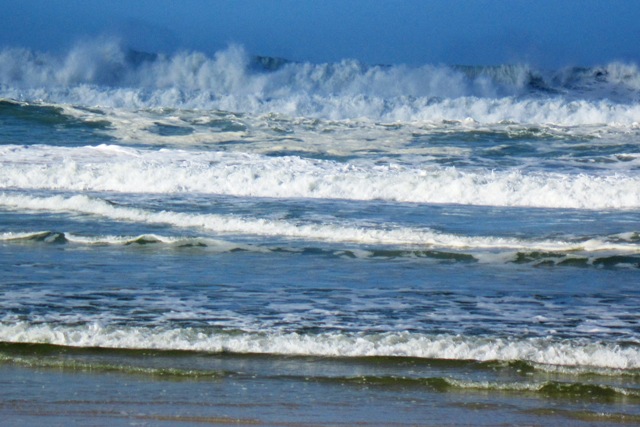
The ocean here is not to be underestemated and is renound for the shiprecks littering its coast. A quick look at the angry waves soon told us why.

We found a lot of light bulbs on the beach. At first we thought that a ship carrying them must have gotten into trouble during the storm. I asked my father about this and he told me that during the night they fish for octopus close to shore and they use a lot of light to do so. When one of the bulb fails they simply chuck it overboard and fit a new one!!! How stupid, selfish and short sighted the human race is!

Soon we reached the mouth of the river once more...

Thursday, 15 September 2011

DeMond

De Mond Nature Reserve is situated 26 km south-east of Bredasdorp on the south-western Cape coast.
 The reserve lies at the mouth of the Heuningnes River. De Mond is 954 ha in size, and comprises former sections of the farmland. It was proclaimed a nature reserve in 1986. This reserve is beautifull, well kept and extremely safe. :) There are places to have a picnic. Fishing is permitted in the river and I can definatelly recommend the hiking trail.

THE HIKE
The Sterna Trail traverses riverine vegetation, dune forest and stabilised dunes before following the coast to the river mouth and saltmarshes.
Distance:  7km
Area:  DeMond Reserve - Cape Nature
Difficulty: Easy
Cost:  R20


The start of the hike is across the rickety bridge. I insisted that we crossed one at a time even though I was told that it is actually a lot sturdier than it looks.


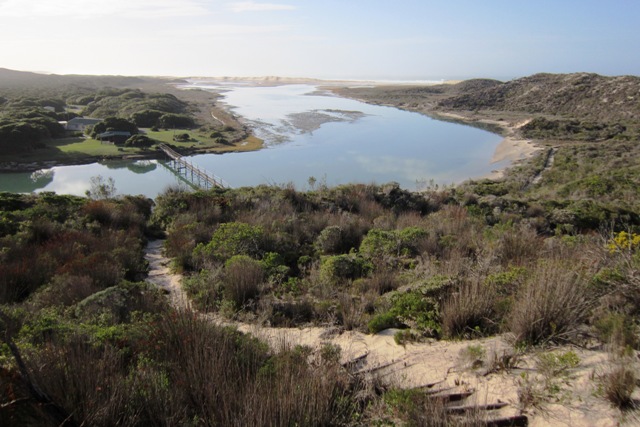
We did this hike early one winters morning. Nature gave us a gap in between two cold fronts. We waisted no time. This is the Heuninges River and today it looked very peacefull after the storm of the night before.

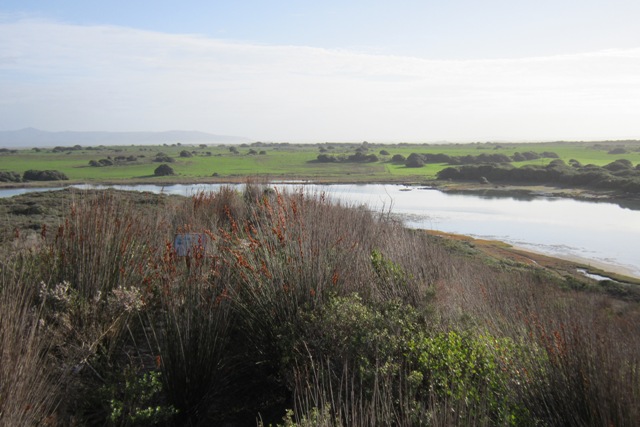
Once across the bridge it is a very short climb up to the lookout point giving you a beautifull view over DeMond. (DeMond is Dutch for River Mouth). The Heuningnes estuary is Africa's southernmost estuary. The estuary is bounded by the Indian Ocean in the south and agricultural lands in the north. It extends approximately 12 km across the coastal plain of the Zoetendals Valley.
Back on the trail I was surprised how many flowers we saw. This time of year, it being the middle of winter,  is not really known for its flowers. The soil is sandy and does not seem furtile at all. How wrong I was. :) Below is my feeble efforts of capturing some of the delicate flowers we saw. We even saw a pair of mushrooms growing right out of the sand.


Soon we turned our backes towards the heuninges river and headed along a jeep track hugging the fence of the reserve. The main farming activity in the area is Sheep and Canola.


Wednesday, 7 September 2011

Hunting Leopards with Harold Part 2

We were venturing ever deeper into the gorge. We were surrounded by beautifully shaped trees and babbeling brooks. :)
When we reached the end of the road we were greeted with a serene pool patiently accepting water from the tumbeling waterfall.

We stayed here for a while soeaking up the peace. Enjoying the quiet tranquility. We listened to the birds high up in the trees.

This is the perfect spot to relax on a Sunday afternoon. There were lots of other people with the same idea, so we decided to move on.


We turned around a started hiking back. Half way down the road, instead of turning left back towards Harold Porter you can turn right and explore more of the mountain... We turned right.


The vegitation is typical beach-fynbos. During the end of summer, the driest time of year for us Capetonians, most of the flowering plants are bare of color, but every now and again you come across something special.
We walked up the hill and then back down again and rejoined the another path. This part of the hike is suitable for wheelchairs and they went to a lot of trouble to make it easy and accessible.


Ad the end of this path is another beautiful waterfall with a viewing deck and some benches. We grabbed this opertunity go have some lunch.

After lunch we headed back to Harold porter to grab a beer at the restaurant. On the way we came across this amazing Golden Orb Spider.
At home I have a Garden Orb spider named Sarel. These spiders are known for ther intricate and elaborate webs. Some of them spin a web every day. The strands of the Golden Orb spider-web is tinged in gold. Hence the name. Below I will include a picture of "Sarel"  Orb spiders are not poisonous so if you come across one in your garden leave them be. They are amazing creatures and wonderful to watch.


We were greeted with a final view of the ocean before we re-enterd the garden and civilization. This is the perfect place for Sunday luch, a picnic with the children or a leasurely stroll to admire Cape Towns rich and diverse plant life. Definatelly worth a visit!

Tuesday, 6 September 2011

Hunting Leopards with Harold

The History
During the 1930’s land in the Hangklip area between the Palmiet River and the Rooiels River was acquired by three business partners, namely Harold Porter, Arthur Youldon and Jack Clarence.  They called it the Hangklip Beach Estates.

After a fire in 1940 Harold Nixon Porter acquired an extensive tract of land in the Betty’s Bay area to develop a garden and private nature reserve.  He named it Shangri-la, meaning 'paradise'. After Harold Porters Death in 1958 the garden was renamed in his honor.

Entrance Fees:
Adults: R16 Senior Citizens: R10
Students: R10
Children: R6
Pre-school: Free


The Hike
Leopards Gorge
Difficulty:  Very Easy
Distance:  About 4km out and back.

Once you are inside the Harold Porter Park head towards the mountain. You will soon find a sign post indicating the start of the trail.

Just after you cross this beautiful little bridge you turn right and head towards the gorge that gives this fantastic little trail it's name.


On this hike we managed Stiaan's brother to come along with us. It was a beautiful day in late spring. The air cool with that unmistakable ocean freshness. It was definitely a good day to be alive. :)

Soon we came across a beautiful stream with a small pool. Perfect for stocking up on ice cold mountain water... and we never let such an opportunity go to waste.


The trail now enters its shaded section and stays this way until you reach your final destination. We were surrounded by beautiful indigenous trees with the stream to our left and the mountain to our right.

The gradient is not steep at all and most of the time you do not even realise that you are steadily climbing upwards towards the gorge. Every now and again you catch a glimpse of the ever present river as it pools into beautiful rust-colored dams of various sizes.

There are handy wooden step ladders to help you over the higher rocks making this a very easy hike acessible to even small children.

We passed waterfall after waterfall and pool after pool. Each one more beautifull than the previous. The water looked very inviting especially on a warm summers day. Unfortunatelly there are no swimming in any of these pools. :(